

Exercise Neuroscience & Neuroimaging
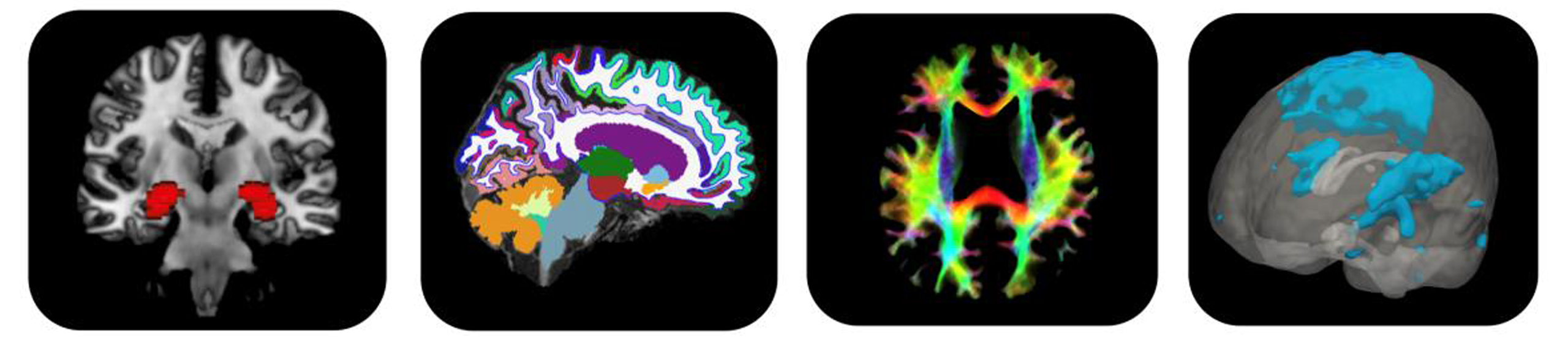
 Our research group is a leading contributor to the emerging field of exercise neuroscience. Our research bridges the gap between neuroscience and exercise science by characterizing body-brain interactions and investigating how physical activity shapes human brain structure and function. Using advanced neuroimaging techniques, we conduct controlled exercise interventions to analyze brain data at the systems level. We study acute and chronic exercise scenarios in order to understand how specific training parameters, such as intensity and duration tailored to individual fitness levels, affect the brain. Our foundational research topics are comprehensively addressed in the Springer textbook, Functional Neuroimaging in Exercise and Sport Sciences, edited by Henning Boecker, Charles H. Hillman, Lukas Scheef, and Heiko K. Strüder.
Theme 1. How Exercise Alters Central Neurotransmission
Human neuroimaging evidence demonstrates that physical exercise directly modulates opioidergic and dopaminergic neurotransmission. These neural pathways regulate critical processes including mood changes, reward processing, antinociception, and, in its most extreme manifestation, exercise dependence (PMID: 26477649). Advanced imaging reveals that both short-term strenuous exertion and long-term exercise routines trigger distinct neuroadaptive shifts within these networks. Specifically, pioneering PET ligand activation studies show that acute, strenuous physical activity alters brain opioidergic neurotransmission in direct association with elevated mood states (PMID: 18296435). Furthermore, fMRI assessments tracking the fractional amplitude of low-frequency fluctuations (fALFF) indicate that long-term exercise induces functional neural adaptations that occur preferentially in localized brain networks with rich dopaminergic and opioidergic receptor distributions (PMID: 38455686). Collectively, these studies map chemical architecture through which exercise impacts human mental health and behavior.
Theme 2. How Exercise alters Brain Activity and Cerebral Perfusion
Emerging neuroimaging research demonstrates that physical activity is a powerful modulator of brain function, with its effects varying by exercise intensity, duration, and specific neural mechanisms. Resting-state functional MRI (fMRI) studies reveal that different intensities of acute exercise influence distinct brain networks in an inverted U-type manner: While acute low-intensity exercise enhances connectivity within networks tied to attention and cognitive control (PMID: 38613926), acute high-intensity exercise primarily impacts networks linked to emotion and mood (PMID: 38646163). Exercise intensity-dependent alterations in amygdalar-insular functional connectivity were associated with mood changes (PMID: 32300362). By linking resting-state fMRI with targeted neuropsychological tests, functional brain plasticity can be directly linked to cognitive outcomes. For instance, long-term exercise has been shown to drive hippocampal subfield plasticity, which associates with improvements in spatial memory (PMID: 38443439). Furthermore, advanced brain perfusion MRI utilizing pseudo-continuous arterial spin labeling (pCASL) has identified region-specific increases in local blood flow after six months of endurance training, partly correlating with individual fitness performance gains (PMID: 36034125). Moving forward, ongoing research utilizes functional connectomics to comprehensively map how overall measures of brain integration and complex information flow are altered by sustained physical exercise.
Theme 3. Heart and Brain interactions in Exercise
We probe the specific role of cardiovascular adaptations as mediators of cognitive enhancement, affective homeostasis, and motor system plasticity induced by long-term physical exercise. Up to now, the physiological adaptations to regular physical exercise within the cardiovascular system (such as cardiac remodeling and arterial resistance) and the central nervous system (including structural and functional brain plasticity) have rarely been explored in parallel. Consequently, the dynamic interdependencies between these systems and their critical roles in shaping cognitive, affective, and motor behavior remain poorly understood. To address this gap, we propose to study the co-adaptation dynamics of the heart and brain within the framework of a 6-month randomized physical exercise intervention using advanced, multimodal cardiovascular and central nervous system magnetic resonance imaging (MRI). Ultimately, this research aims to unravel the underlying, interconnected physiological mechanisms that drive multifaceted behavioral adaptations to physical exercise.
Theme 4. Potential Translation to Prevention and Treatment
Our research focuses specifically on exercise effects in young sedentary adults, given that understanding the underlying mechanisms of brain health mitigation by exercise may promote most effectively long-term health outcomes. We argue that structural and functional imaging markers at this early age may most effectively help to guide personalized exercise prescriptions for cognitive and affective health outcomes. Furthermore, these biomarkers serve as critical tools for developing prevention strategies against aging, neurodegenerative disorders, depression, and chronic pain states, while also enabling targeted therapy monitoring.