
Menu

Hygiene and Public Health

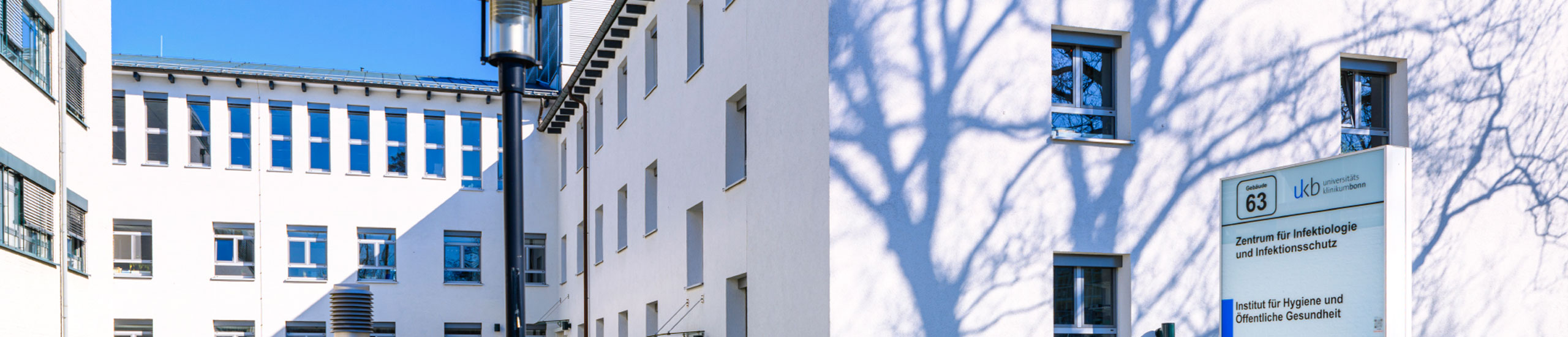
The Institute for Hygiene and Public Health (IHPH) at the University Hospital Bonn combines expertise across a broad spectrum — from water hygiene to medical geography, environmental medicine to disinfectant testing, hospital hygiene, global health and One Health.

Committed to infection control and public health since 1894.

Equipped with a modern, accredited laboratory infrastructure, we offer a comprehensive range of chemical, microbiological and hygienic contract analyses, including water hygiene (drinking, bathing, wastewater and process water), technical hygiene (large-scale technical systems, fittings, etc.), disinfectant testing (e.g. testing of procedures for reprocessing medical devices, biofilm efficacy of disinfectants, etc.) and numerous further services. In addition to contract testing and services, the IHPH is active in research, teaching, continuing education and consulting in many ways — well beyond the Bonn location — and also houses the (travel medicine) vaccination clinic at the University Hospital Bonn.

Prof. Dr. med. Nico T. Mutters, MPH
Institutsdirektor


We look forward to your visit to our website and for contacting us.

Anna Bücken,
Executive Assistant,
Institute for Hygiene and Public Health,
Tel.: +49 228 287-15520,
        +49 228 287-15521,
anna.buecken AT ukbonn.de

Buecken Anna

 
Vakzin und Spritze liegen zum Impfen bereit.

Person im Labor, die Flüssigkeit in einem Erlenmeyerkolben begutachtet

Behandschuhte Hand hält ein Reagenzglas mit klarem Wasser; im Hintergrund Meeresufer mit flacher Welle

Behandschuhte Hände räumen Zahnarztbesteck in einen Autoklaven
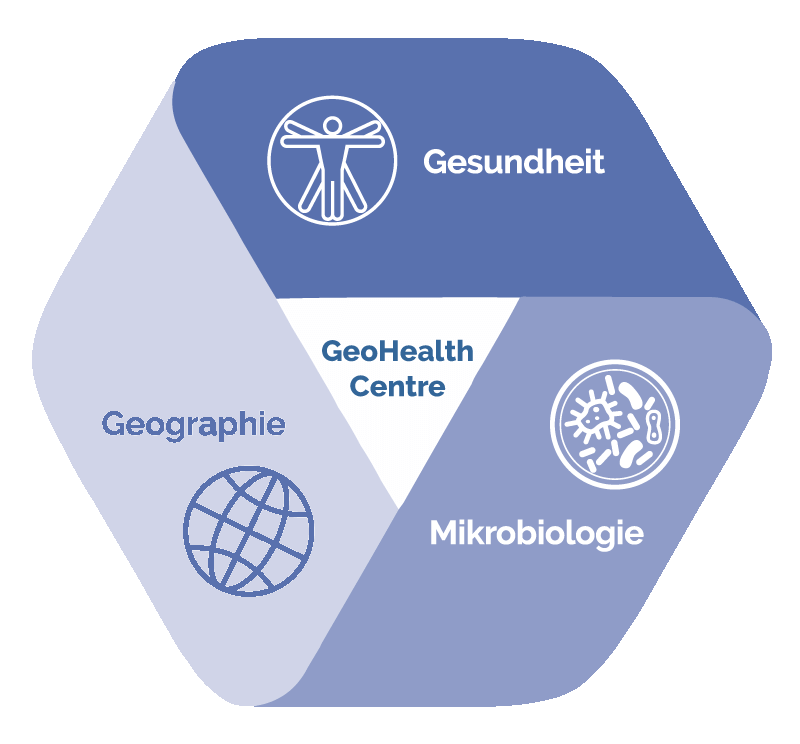
GeoHealth Schema

Ein Paar Hände hält Saatgut in der Hand, ein anderes Wasser. Davor ist ein Teil der Erde aus Weltraumsicht abgebildet.
27.03.2026

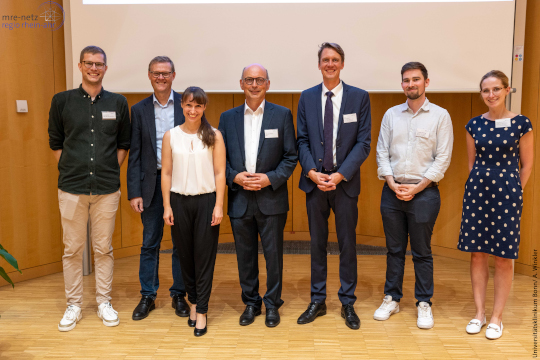
Schwerpunktveranstaltung 2026 des mre-netz regio rhein-ahr widmet sich dem Ausbruchs- und Hygienemanagement Bonn, 10. September 2026 – Wie lassen sich Ausbrüche mit alten, neuen oder seltenen Krankheitserregern früh erkennen und sicher beherrschen? Diese Frage stand im Mittelpunkt der diesjährigen sektorenübergreifenden Schwerpunktveranstaltung des mre-netz regio rhein-ahr am Institut für Hygiene und Öffentliche Gesundheit (IHPH) des Universitätsklinikum Bonn (UKB). Unter dem Schwerpunktthema „Ausbruchs- und Hygienemanagement“ tauschten sich Fachleute aus Krankenhäusern, Pflegeeinrichtungen und weiteren Bereichen des Gesundheitswesens über aktuelle Herausforderungen und praktische Lösungen aus. Ein Schwerpunkt lag auf Candidozyma auris. Der Hefepilz kann in medizinischen Einrichtungen zu schwer beherrschbaren Ausbruchsgeschehen führen. Prof. Dr. med. Nico T. Mutters vom IHPH und Dr. Marvin Rausch vom Verbund für Angewandte Hygiene (VAH) stellten neue Erkenntnisse zum Umgang mit C. auris, wie Screeningstrategien und geeignete Desinfektionsmittel, vor. „Candidozyma auris ist ein noch vergleichsweise neuer Erreger, der die Krankenhaushygiene vor besondere Herausforderungen stellt. Seine hohe Umweltpersistenz und die eingeschränkte Empfindlichkeit gegenüber einzelnen Antimykotika zeigen, wie wichtig konsequente Basishygienemaßnahmen und insbesondere eine sorgfältige Händehygiene sind. Durch die konsequente Umsetzung bewährter Hygienemaßnahmen können wir seine Weiterverbreitung in Gesundheitseinrichtungen wirksam verhindern“, betont Prof. Mutters. Wie wichtig ein strukturiertes Vorgehen auch bei anderen übertragbaren Erkrankungen ist, zeigte Dr. med. Edith Fischnaller von den GFO-Kliniken am Beispiel eines Skabies-Ausbruchs. Skabies, umgangssprachlich Krätze, kann sich in Gemeinschafts- und Gesundheitseinrichtungen rasch verbreiten. Entscheidend sind deshalb ein frühes Erkennen, klare Abläufe und Verantwortlichkeiten sowie konsequent umgesetzte Hygienemaßnahmen. Einen Blick in einen besonders geschützten Bereich der Infektionsforschung gab Dr. Susann Kummer vom Robert Koch-Institut: Sie vermittelte praktische Einblicke in die Arbeit eines S4-Labors, der höchsten biologischen Sicherheitsstufe, und zeigte, welche Sicherheitsmaßnahmen beim Umgang mit besonders gefährlichen Erregern notwendig sind. Weiterhin gab sie einen spannenden Einblick in aktuelle Forschungsergebnisse mit Organoiden, die Tierversuche reduzieren und teilweise ersetzen sollen. Die jährlich stattfindenden Schwerpunktveranstaltungen des mre-netz regio rhein-ahr dienen der Fortbildung und dem sektorenübergreifenden Austausch zu aktuellen Themen des Infektionsschutzes. Die Veranstaltung 2026 fand hybrid statt und endete mit einem gemeinsamen Austausch und Netzwerken der Teilnehmenden.

27.03.2026

University of Bonn to host not one but two new Research Training Groups; H-BRS first ever university of applied sciences to be involved What is the best way to shape the future of waterfront cities in the Global South in the face of challenges like climate change? How are conflicts overcome in various different cultures? These key questions are now to be explored by two new Research Training Groups (RTGs) at the University of Bonn. Alongside the University Hospital Bonn as a partner, the proposal was also submitted together with a university of applied sciences for the first time in the shape of Hochschule Bonn-Rhein-Sieg University of Applied Sciences (H-BRS). The German Research Foundation (DFG) is providing the two institutions with millions of euros in funding to train doctoral students. Across Germany, the DFG will be supporting 10 new RTGs in all from fall 2026 onward. 

27.03.2026

The DFG is funding a research training group on shaping the future of waterfront cities in the Global South. Bonn, June 2 – How can the future of waterfront cities in the Global South best be shaped in light of challenges such as climate change? A new Research Training Group at the University Hospital Bonn ( UKB ) and the University of Bonn is addressing this central question. For the first time, a university of applied sciences, Bonn-Rhein-Sieg University of Applied Sciences (H-BRS), is participating. The German Research Foundation (DFG) is providing millions of euros in funding for the program to qualify doctoral candidates. Nationwide, the DFG will support a total of ten new Research Training Groups starting in autumn 2026.FG will support a total of ten new Research Training Groups starting in autumn 2026.

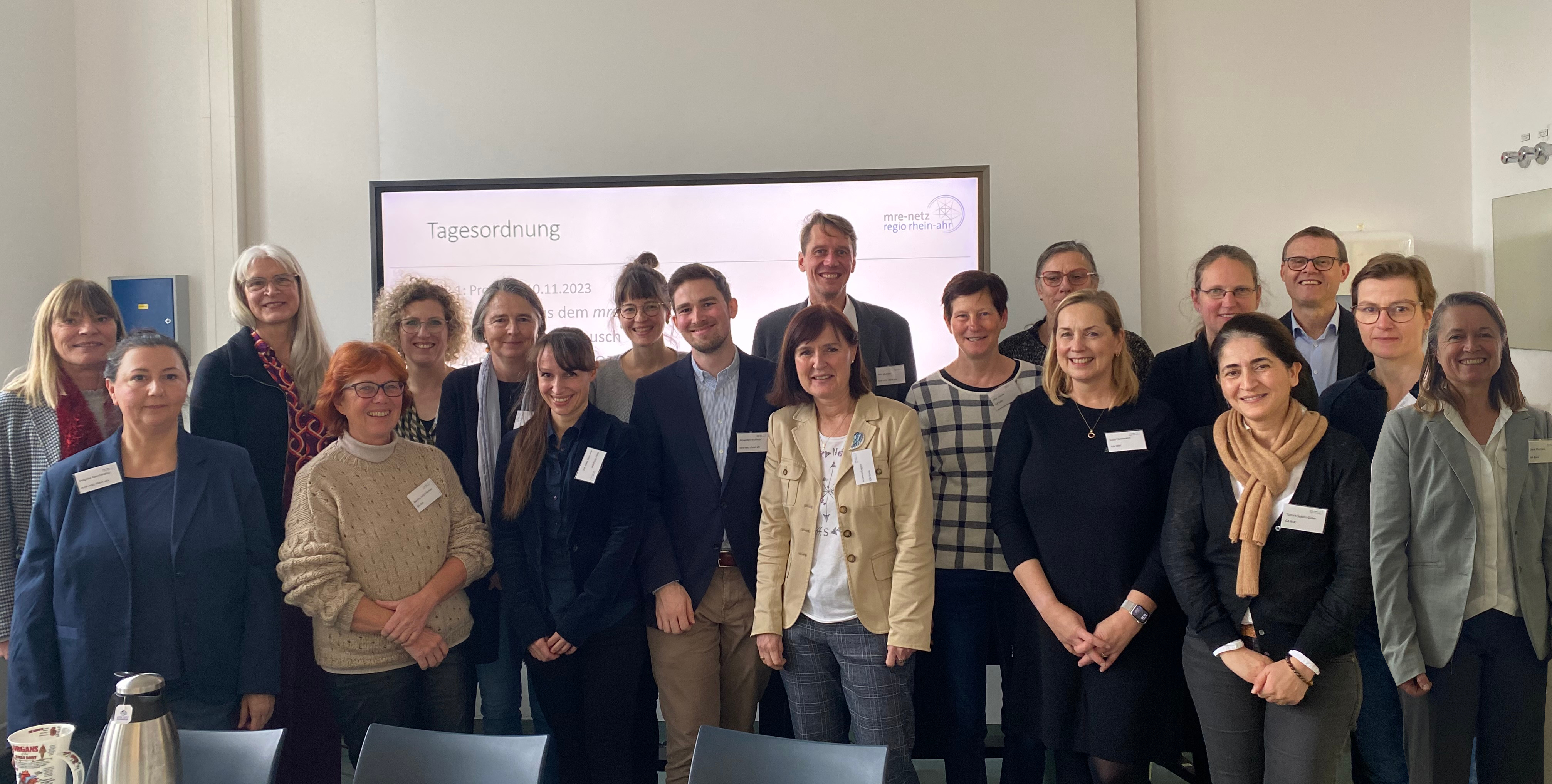
mre-netzt SPV2022

 
This website is using cookies to provide a good browsing experience.

These include essential cookies that are necessary for the operation of the site, as well as others that are used only for anonymous statistical purposes, for comfort settings or to display personalized content. You can decide for yourself which categories you want to allow. Please note that based on your settings, not all functions of the website may be available.

This website is using cookies to provide a good browsing experience.

These include essential cookies that are necessary for the operation of the site, as well as others that are used only for anonymous statistical purposes, for comfort settings or to display personalized content. You can decide for yourself which categories you want to allow. Please note that based on your settings, not all functions of the website may be available.

Your cookie preferences have been saved.